AI and the future of tourism: What operators must understand now
Don't miss this rare peek into Spark!

Artificial intelligence isn’t a future trend for tourism. It’s already reshaping how travelers search, compare, and book experiences.
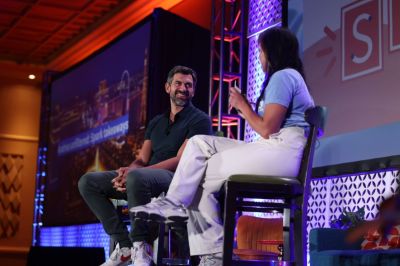
At FareHarbor Spark 2025, Dan Chuparkoff’s keynote cut through the noise. Instead of focusing on hype, he reframed AI as something far more practical: a tool that changes how work gets done, not whether it gets done.
Here’s what tour and activity operators need to understand right now.
We’ve seen this before
In the keynote, Dan shared a story about the early days of design software. When AutoCAD first appeared, one leader famously said:
“That thing in the basement can’t do my job.”
The fear wasn’t about the tool. It was about misunderstanding what the tool could actually do.
Some imagined AutoCAD would magically design buildings on its own. In reality, it became a powerful assistant, helping professionals work faster and more accurately, but never replacing their expertise.
AI is in a similar place today.
It won’t conjure tours out of thin air. It won’t replace your guides. It won’t run your business autonomously.
It will help you work more efficiently.
And that distinction matters.
Wrong answers aren’t the real risk
Another moment from the keynote that resonated with operators was the now-infamous pizza example.
Someone on Reddit suggested mixing Elmer’s glue into pizza cheese to keep it from sliding off too easily. It’s obviously a terrible idea. But it illustrates something important about AI.
AI generates responses based on the information available to it. Sometimes that information includes bad ideas.
But here’s the key: You know it’s wrong.
Dan compared this to autocomplete. Would you let autocomplete text your friends without reviewing it? Of course not. You use it as a tool, not a decision-maker.
That’s the mindset shift operators need.
One of the most powerful prompts you can use with AI is simple:
“I disagree with you. That’s not a good enough answer.”
AI is a collaborator. Not an authority.
The hierarchy of work is changing
One of the most important frameworks from the session was the hierarchy of work:
- Communicate
- Process
- Investigate
- Problem solve
- Decide
- Imagine
AI can handle the first three at scale. It can draft emails. It can process booking data. It can analyze reviews and surface trends.
But it doesn’t replace the higher levels.
You still:
- Solve complex guest issues.
- Decide on pricing strategies.
- Imagine new experiences.
- Shape your brand voice.
- Create unforgettable tours.
That’s the opportunity.
AI removes repetitive layers so you can focus on what actually grows your business.
What this means for tour and activity operators
AI isn’t theoretical for tourism. It’s already influencing how you operate.
Here are practical applications operators should be exploring:
Smarter customer communication
- Semi-automated email responses
- AI-drafted replies to reviews
- Instant response suggestions for common questions
You stay in control. AI handles the first draft.
On-tour enhancements
- AI-powered audio guides
- Live translation tools
- Conversational booking assistants
These tools don’t replace your team. They enhance accessibility and personalization.
Revenue growth opportunities
- Personalized bundles and cross-sells
- Dynamic pricing based on demand
- Inventory forecasting tied to events and weather
When AI helps you process data faster, you make smarter decisions sooner.
Fraud prevention and payments
AI is also improving:
- Fraud detection
- Payment risk analysis
- Chargeback prevention
That protects revenue without increasing manual oversight.
The shift from SEO to AIEO
Perhaps the biggest change is happening in search.
Traditional search engine optimization (SEO) focused on ranking in blue links. Now, AI-driven search engines synthesize answers directly. This is where AI Engine Optimization (AIEO) comes into play.
Travelers increasingly ask conversational questions:
- “Best sunset boat tour in Maui.”
- “Family-friendly kayak tours near me.”
- “Private snorkeling experience with small group.”
AI pulls from structured, clear, authoritative content.
That means operators need:
- Well-written experience descriptions
- Strong FAQs
- Clean, structured data
- Authentic reviews
- Clear value propositions
Pro tip: Audit your tour descriptions and FAQs. If they aren’t clear enough for AI to summarize accurately, they’re probably not clear enough for customers either.
The operators who adapt their content now will gain long-term visibility advantages.
AI won’t take your job but it will change it
There’s a common fear that AI will eliminate work. History suggests something different.
Technology tends to eliminate repetitive tasks. It rarely eliminates human judgment. If AI reduces time spent on communication, processing, and investigation, what happens? You gain more time for:
- Strategic thinking
- Product development
- Brand building
- Customer experience refinement
There’s even a broader possibility. If AI increases efficiency across industries, people may end up with more discretionary time.
And what does discretionary time fuel?
Travel.
Tourism doesn’t shrink in an AI-powered world. It evolves.
The operators who win will experiment early
The AutoCAD story wasn’t about replacement. It was about adaptation. The same applies today. You don’t need to rebuild your business around AI overnight. But you do need to:
- Test tools.
- Learn how to prompt effectively.
- Review outputs critically.
- Stay curious.
AI is not a basement machine plotting to replace you. It’s a tool waiting to amplify what only you can do.
The question isn’t whether AI will shape the future of tourism. It already is. The real question is how you’ll use it.
FareHarbor gives you the tools to automate smarter, optimize revenue, and focus on what only you can do: solve, decide, and imagine. Book a free demo and see what’s possible.